
Tanzania e-Ardhi System 2025: An In-Depth Guide to Digital Land Services, NIDA Registration, and Online Applications

Introduction
The Government of the United Republic of Tanzania has undertaken a major reform in land administration through the implementation of the e-Ardhi system, a comprehensive digital platform developed and managed by the Ministry of Lands, Housing and Human Settlements Development. This system represents a decisive transition from manual, paper-based land administration processes to a fully digital framework that allows land services to be accessed, processed, and monitored online. The introduction of the e-Ardhi public portal has eliminated the long-standing requirement for applicants to physically submit documents at land offices, thereby reducing administrative bottlenecks, improving transparency, and enhancing the overall efficiency of land service delivery.
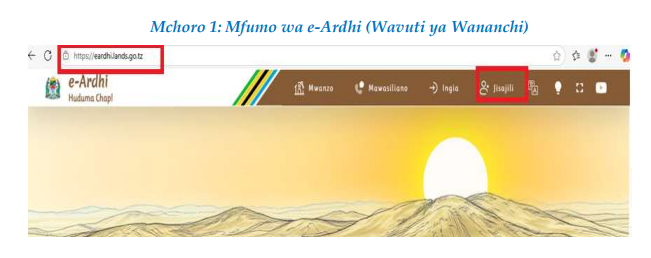
All land-related applications and services are now processed exclusively through the official e-Ardhi portal at https://eardhi.lands.go.tz/ , making it the single authoritative platform for digital land services in Tanzania.
Background and Purpose of the e-Ardhi System
The e-Ardhi system was designed as part of Tanzania’s broader digital government and public sector reform agenda, with the objective of modernizing land governance and improving the security and reliability of land records. Historically, land administration in Tanzania faced challenges such as fragmented records, lengthy processing times, limited transparency, and a high dependence on physical documentation. By digitizing land services, the government has addressed these challenges through the creation of a centralized electronic land information system that integrates application workflows, document management, payment processing, and approval mechanisms.
The system supports both individual and institutional users, including citizens, real estate developers, financial institutions, investors, and legal professionals, and is accessible nationwide through internet-enabled devices.
Legal and Institutional Framework
The e-Ardhi system operates under the authority of the Ministry of Lands, Housing and Human Settlements Development and is aligned with existing land laws, regulations, and policies governing land ownership, tenure, and transactions in Tanzania. The digital processes embedded in the system mirror statutory requirements, ensuring that all applications submitted through the portal are legally valid and enforceable. By integrating digital verification mechanisms, the system enhances compliance with land legislation while strengthening institutional oversight and accountability.
Mandatory National Identification Number (NIDA) Requirement
A fundamental requirement for accessing and using the e-Ardhi system is possession of a valid National Identification Number issued by the National Identification Authority. The NIDA number serves as the primary identity verification tool for individuals and authorized representatives of institutions, enabling the system to authenticate users and link land transactions to verified national identity records.
The mandatory use of NIDA numbers supports several critical objectives, including the prevention of identity fraud, elimination of duplicate registrations, and protection of property rights through accurate ownership attribution. Applicants whose NIDA details are inactive, inconsistent, or incomplete will be unable to register on the portal, and such users are required to resolve their identification status with NIDA before attempting to access land services.
Registration on the e-Ardhi Public Portal
The registration process on the e-Ardhi public portal has been structured to balance ease of access with high standards of security and data integrity. To create an account, a user must visit the official portal and initiate the registration process by entering their NIDA number along with an active personal mobile phone number. The phone number plays a critical role in system security, as it is used to deliver one-time passwords for verification as well as notifications related to application progress and system updates.
After submitting the required details, the system automatically sends a one-time password to the registered phone number, which the user must enter within a specified time period to complete identity verification. Upon successful verification, the user is required to create secure login credentials that comply with system security policies. Once registration is completed, the account becomes active and grants access to the user dashboard, where all available land services can be accessed.
Structure and Functionality of the User Dashboard
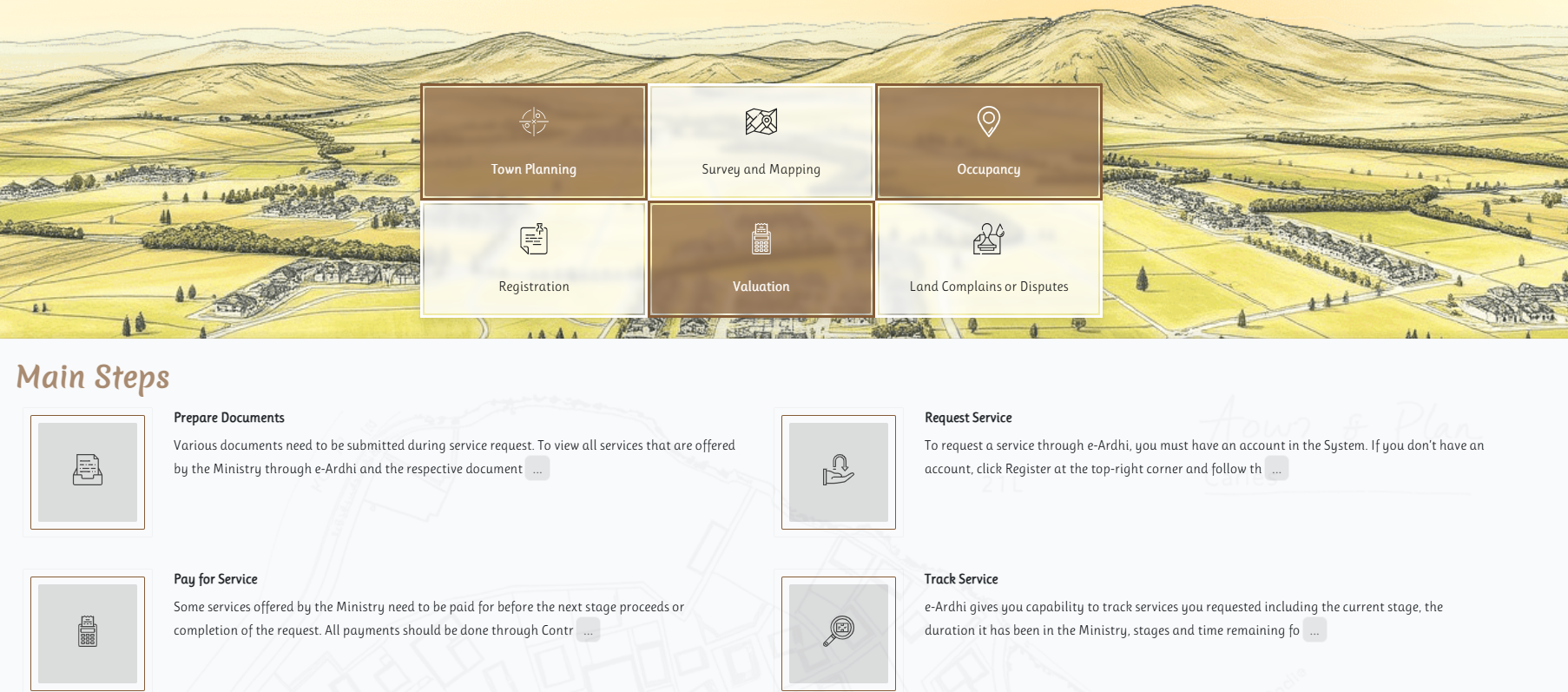
The e-Ardhi user dashboard serves as the central interface through which users manage all land-related activities. From this dashboard, users can initiate new applications, upload documents, make payments, track the status of submitted requests, and access historical records of completed transactions. The dashboard is designed to be intuitive and user-friendly while maintaining the level of detail required for statutory land processes.
Key functions available through the dashboard include application management, payment tracking, document uploads, and status notifications, all of which contribute to a streamlined user experience.
Land Services Available Through the e-Ardhi System
The e-Ardhi system supports a comprehensive range of digital land services that reflect the full scope of land administration responsibilities of the Ministry of Lands. These services include, but are not limited to:
Application for Certificates of Right of Occupancy
Transfer and registration of land ownership
Registration of mortgages, charges, and other encumbrances
Applications for change of land use
Subdivision and amalgamation of land parcels
Digital payment of land rent and statutory fees
Verification and official search of land title records
Each service follows a structured digital workflow that ensures consistency, accuracy, and compliance with legal requirements, while eliminating the need for physical document submission.
Applying for a Certificate of Right of Occupancy Through e-Ardhi
The process of applying for a Certificate of Right of Occupancy through the e-Ardhi system is fully digital and guided to minimize errors and omissions. After logging into the portal, the applicant selects the relevant service and enters detailed information about the land parcel, including plot number, block number, registered plan number, and geographical location. The system then prompts the applicant to provide ownership or applicant details, which for individual users are linked directly to NIDA records, and for institutions include company registration and authorized signatory information.
Supporting documents must be uploaded in digital format, and these typically include survey plans, sale or transfer agreements, letters of offer or allocation, and powers of attorney where applicable. Once all information has been reviewed for accuracy, the applicant completes the process by making the required payments through the system’s integrated electronic payment channels and submitting the application for review.
Digital Payments and Financial Transactions
The e-Ardhi system incorporates secure electronic payment mechanisms that allow users to pay application fees, land rent, and other statutory charges directly through the portal. Upon successful payment, the system generates a transaction reference number that is automatically linked to the corresponding application. This integration ensures accurate financial reconciliation and eliminates the need for manual payment confirmation, thereby reducing delays and administrative errors.
Application Review, Tracking, and Decision-Making
Once an application is submitted, it enters a structured review process conducted by authorized officers within the Ministry of Lands. The e-Ardhi system allows applicants to monitor the progress of their applications in real time using a unique tracking reference. Status updates provided through the dashboard typically include confirmation of receipt, verification and technical review, payment confirmation, approval or request for additional information, and final completion.
This real-time tracking capability enhances transparency, reduces uncertainty for applicants, and minimizes the need for in-person follow-ups at land offices.
Data Security and Integrity
Data security is a central feature of the e-Ardhi system, which employs modern digital safeguards to protect personal information, land records, and transaction data. By maintaining centralized and digitized land records, the system reduces the risk of document loss, unauthorized alteration, and duplication, while ensuring that land information is accessible only to authorized users and officials.
Role of e-Ardhi in Tanzania’s Economic and Digital Development
The introduction of the e-Ardhi system has significant implications for Tanzania’s economic development and investment climate. Secure and efficient land administration is a foundational requirement for real estate development, infrastructure projects, agricultural investment, and access to finance. By simplifying land transactions and improving record reliability, the e-Ardhi platform enhances investor confidence and supports sustainable economic growth.
The system also contributes to the government’s digital transformation agenda by demonstrating how technology can be effectively used to improve public service delivery and governance.
Best Practices for Effective Use of the e-Ardhi System
To ensure efficient processing of applications and minimize delays, users are advised to observe the following best practices:
Ensure that NIDA information is accurate and up to date before registration
Use a personal and active mobile phone number for system verification
Upload clear, complete, and legible digital copies of all required documents
Carefully review application details before submission
Regularly check the user dashboard for status updates and notifications
Conclusion
The e-Ardhi system represents a transformative advancement in land administration in Tanzania by providing a secure, transparent, and fully digital platform for accessing land services. Through mandatory NIDA-based registration, electronic document submission, integrated digital payments, and real-time application tracking, the Ministry of Lands, Housing and Human Settlements Development has established a modern land governance framework that improves service efficiency, strengthens property rights, and supports national development objectives.
All individuals and institutions seeking land services in Tanzania are encouraged to use the official e-Ardhi public portal at https://eardhi.lands.go.tz/ to access reliable, efficient, and legally compliant digital land services. download user manual, for support contact Danvast Land and Property.
News insight
 Oct 02, 2026
 Land Acquisition in Tanzania by Non-Citizens: Transfer of Titled Property and Investment Land
Learn how foreigners can acquire land in Tanzania through property transfer, Derivative Rights, TISE...
 Feb 14, 2026
 How to Verify Land Title in Tanzania: Legal Procedure, Institutional Review, and Modern Verification Systems
Land verification in Tanzania is a legal process grounded in statutory law and administered through...
 Dec 20, 2025
 Houses, Apartments, Plots & Viwanja for Sale in Dar es Salaam
Dar es Salaam is one of the fastest-growing cities in East Africa, making real estate investment in...